


Community organizer, Anita Cunningham, reached out to me about joining Dogwood Alliance’s North Carolina Legislative Fellowship. At first, it surprised me to realize I knew almost nothing about the wood pellet biomass industry. I’ve been involved in environmental justice work since my sophomore year of college. I was excited to learn about an issue that was completely new to me. I was already familiar with advocacy work. Such as researching policy, lobbying legislators, and participating in many environmental justice projects.

But before accepting the opportunity, I did my own research. I wanted to understand all sides before forming my own opinion. I wanted to understand why the wood pellet industry had support in the first place. At first, I could see the appeal. The industry presents wood pellets as a renewable energy source. On the surface, it seems like a good idea. But the more I learned, the more I realized. There was an entire side of the story that wasn’t being told enough. The community side of the story. The environmental justice side of the story.
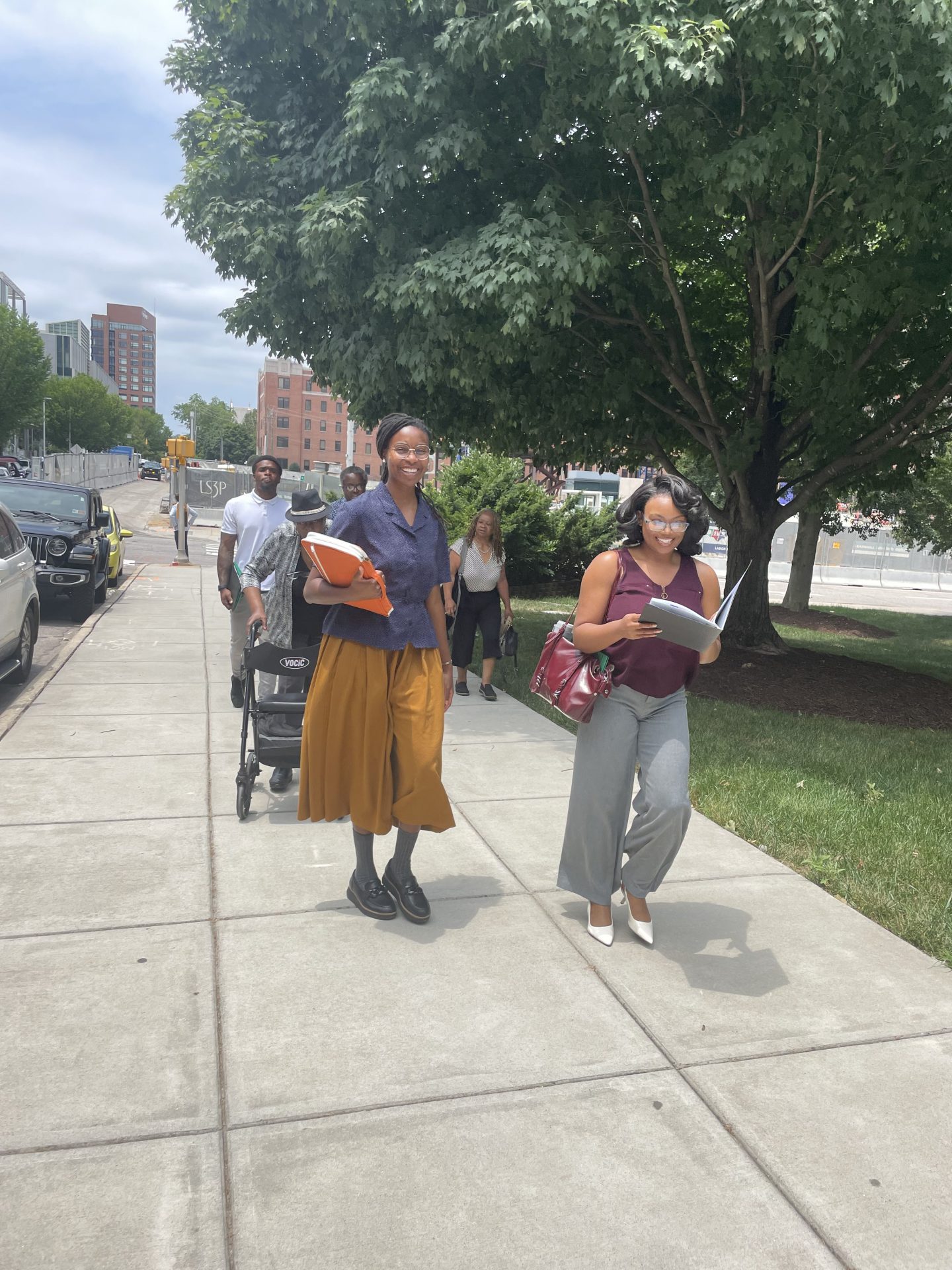
NC Lobby Day gave me the opportunity to bring that missing side of the story to legislators. Every conversation was different. One legislative assistant quickly dismissed our concerns. Others took the time to ask thoughtful questions. One even shared that they had toured an Enviva facility. They initially viewed wood pellets as a good renewable energy source. Dogwood’s NC State Manager, Paige Polk, later described those tours as the “red carpet” experience. That was the perfect description. Of course a company is going to present itself in the best possible light. But we talked about the health concerns of residents. We talked about the negative experiences communities were having with the industry. Then the conversation shifted. Legislators began asking questions instead of simply repeating what they had heard.
My biggest takeaway from this fellowship is that the voices of impacted communities deserve to be heard. That begins with education. Before this summer, I knew almost nothing about the wood pellet industry. It made me realize how many important issues across North Carolina young people have never learned about.
Elections are approaching this November. Colleges and universities should host a nonpartisan civic education event. They can bring community organizations together with faculty and student leaders. They can share their work on different issues across the state. This would be a better strategy than hosting different events throughout the semester. Together, we can combine our resources to create one larger event. The goal is to reach more students while exposing them to a variety of issues. Whether it’s environmental justice or public education. Voting rights or other challenges facing North Carolina. I’m not talking about another class for students to sit through. We need an interactive resource fair with music, food, and activities. Give students opportunities to meet organizations and ask questions. So they can learn how different issues affect communities across our state.
The goal isn’t to endorse candidates or persuade students how to vote. It’s to ensure they understand the issues. It gives them the chance to hear the voices of the communities most affected. This equips students to make informed decisions. College is about preparing students for adulthood, and civic engagement should be part of that journey. Colleges can use social media to highlight these events. They can inspire one another to host their own. This could create a statewide movement that encourages civic engagement. Most importantly, this helps more students become informed citizens.
Democracy is the cornerstone of our ability to affect change. In fact, people power is the only thing that shifts old ways of thinking into new ways of being. The promise of liberty and justice for all hinges on the collective power of people to hold our government accountable. As we celebrate 250 years as a nation, we must do better.
Our democracy is under threat. Black, brown, and Indigenous people are at the center of these threats. ICE is on the streets capturing and detaining innocent immigrants without due process. ICE agents shot people who were protecting their immigrant neighbors. Voting rights that took centuries to secure are being taken away. Politically-motivated gerrymandering threatens the right of people of color to have representation in government.
The federal government is also waging war on the environment. There are countless efforts to roll back environmental laws and fast track destructive projects. Recently, the President has called environmentalists “domestic terrorists”. The federal government is trying to scare environmental activists and advocacy organizations.

This Administration is relentless in its efforts to mislead, sow division, and silence its critics. It can be overwhelming. On a daily basis, people are asking themselves, “What can we do?”
Fear and misinformation are their weapons. Courage and truth must be our response.
This moment is propelling us to double down. We know what it takes to achieve transformative change:
This is how we hold the line on democracy. This is how we hold the government and corporations accountable to the people. This is how we create a better world.
We must be in solidarity with those bearing the brunt of injustice. We know this works. Exposing what actually happens on the ground cuts through government propaganda and misinformation. This helps shift public opinion. It forces the government to respond. For example, regular people have shared countless videos that debunked White House efforts to downplay ICE’s violent and unlawful tactics.
As a result, there was overwhelming public disapproval of ICE. This led to congressional investigations and a change in leadership. The national conversation changed. The needle of public opinion shifted. The government had to act.
For 30 years, this same approach has worked to protect Southern forests and communities from industrial logging. Take the fight against biomass, for example. Governments and industries lost credibility when evidence on the ground proved that they’re lying. They say biomass is clean and green. But the evidence shows it’s dirty and destructive. Stories of people getting sick. Videos of mature forests being destroyed. The truth is that biomass pollutes the air and devastates sensitive ecosystems. There is clear evidence that the wood pellet industry targets low-wealth, Black communities across the South.
The more the truth came out, the more industry and government had to change. They had to backtrack and take action.
We must exercise our constitutional rights to publicly oppose injustice. Even when it’s hard or scary. Only when the undeniable truth comes to light is change possible.
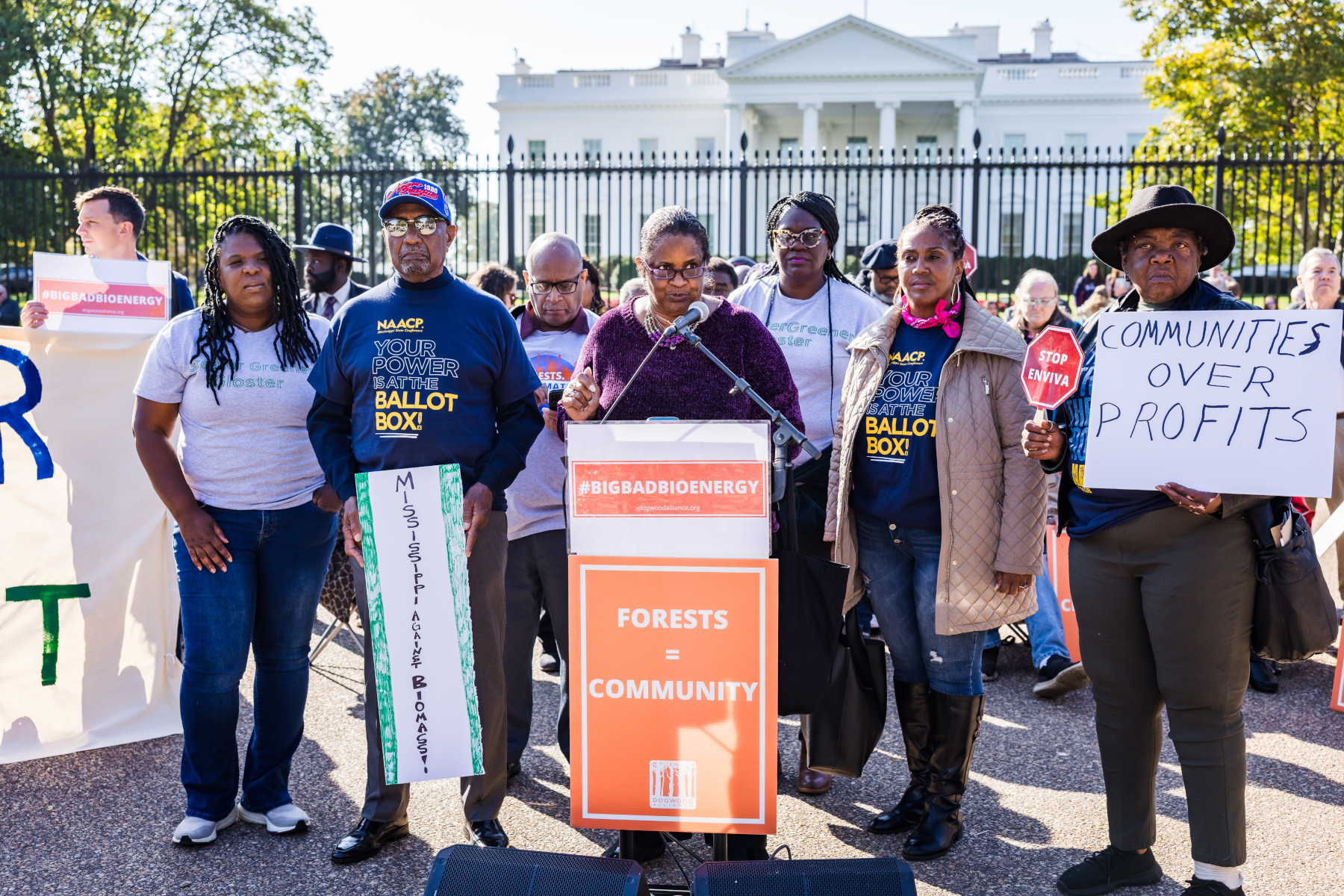
At Dogwood Alliance, our work to protect Southern forests and communities helps hold the line on our democracy. We remain fiercely committed to working alongside the communities most harmed. Together, we’re exposing the truth about the Southern forestry industry’s impacts. We’re holding government accountable. Together we are driving community-led solutions.
People power is the antidote to authoritarianism. Courage, love, hope, and joy are the antidotes to fear, hatred, despair, and oppression. Diversity is our strength. Both in the woods and in our larger movement for a just country and a healthy planet. Together we are strong. Together we shall overcome. So, stay diligent. Stay focused. Stay engaged. And stay united.
Join the movement to protect forests and communities. Sign up for the Dogwood Alliance email list. We’ll share updates with you and opportunities to take action.

Last month, Louisiana’s state legislature officially passed HB670. Soon the governor will sign the bill. This opens the door for a major expansion of the biomass industry. It makes it easy for large scale wood pellet biomass facilities to enter the state and pollute the air. And it’s the communities who’ll bear the healthcare and environmental burdens. This bill is part of a regionwide industry effort. An effort to create more favorable regulatory and financial policies.

Louisiana is the emerging face of industrial expansion in the Deep South. Amazon’s recent $12 billion data center investment in the state is a stark example. The legislature is incentivizing large-scale industries to take root in the state. They’re doing nothing to create protections that ensure community safety.
The wood pellet biomass industry has a history of clean air violations. Biomass companies like Drax and Enviva have shown themselves to be unstable. They’re ineffective industry partners in the Gulf South and nationwide. In the past 5 years alone:
The legislature is putting many Louisianians lives at risk for this unreliable industry. It sets a dangerous precedent.

Louisiana legislators have admitted that they’re uninformed about the biomass industry. That they don’t know the impact biomass has on communities and forests. It’s our responsibility to make our concerns known. We must protect the health and future of Louisianians.
Take Action to stop Drax and dirty biomass in the Southeast.
Drax Biomass cuts down trees and sends them overseas to Asia and Europe to be burned for energy. Drax claims community safety is a priority. Yet they know they’re emitting hazardous air pollutants.
Take action today to shut down Drax and biomass in the US South!

HB 134 is officially law. HB 134 is a fake “Keep Georgia Forested Act.” Now Governor Kemp has put Georgia’s forests and communities at greater risk. This bill helps the failing logging industry. It won’t keep Georgia forested.
Georgia was just on fire. It’s still in severe drought. All while wood biomass plants and AI data centers are popping up everywhere. Georgians face a cost-of-living crisis like many others. But Gov Kemp didn’t choose to help families and protect forests. Instead, he threw a $250 million lifeline to the logging industry. He went so far as to sign the bill into law at the Georgia Forestry Association, an industry front group. Governor Kemp is on his way out with nothing to lose, and he still chose to side with industry over people and nature. This is a consistent pattern of behavior.

Under Kemp’s leadership, the state has put all natural resources in Georgia up for sale. A $250 million giveaway to the logging industry will not save it. We need to prioritize investments that keep forests standing and our communities healthy. $250 million could protect a lot of land. It would help all Georgians, not just those profiting from destructive industries. Forests provide clean water, cleaner air, biodiversity, tourism opportunities, and natural spaces. Forests strengthen local economies and quality of life. Standing forests are far more valuable than short-term destruction for profit. Governor Kemp’s signing of HB 134 is his refusal to recognize that. But protecting our forests is vital to the prosperity of future generations.
We would ALL be better for it.
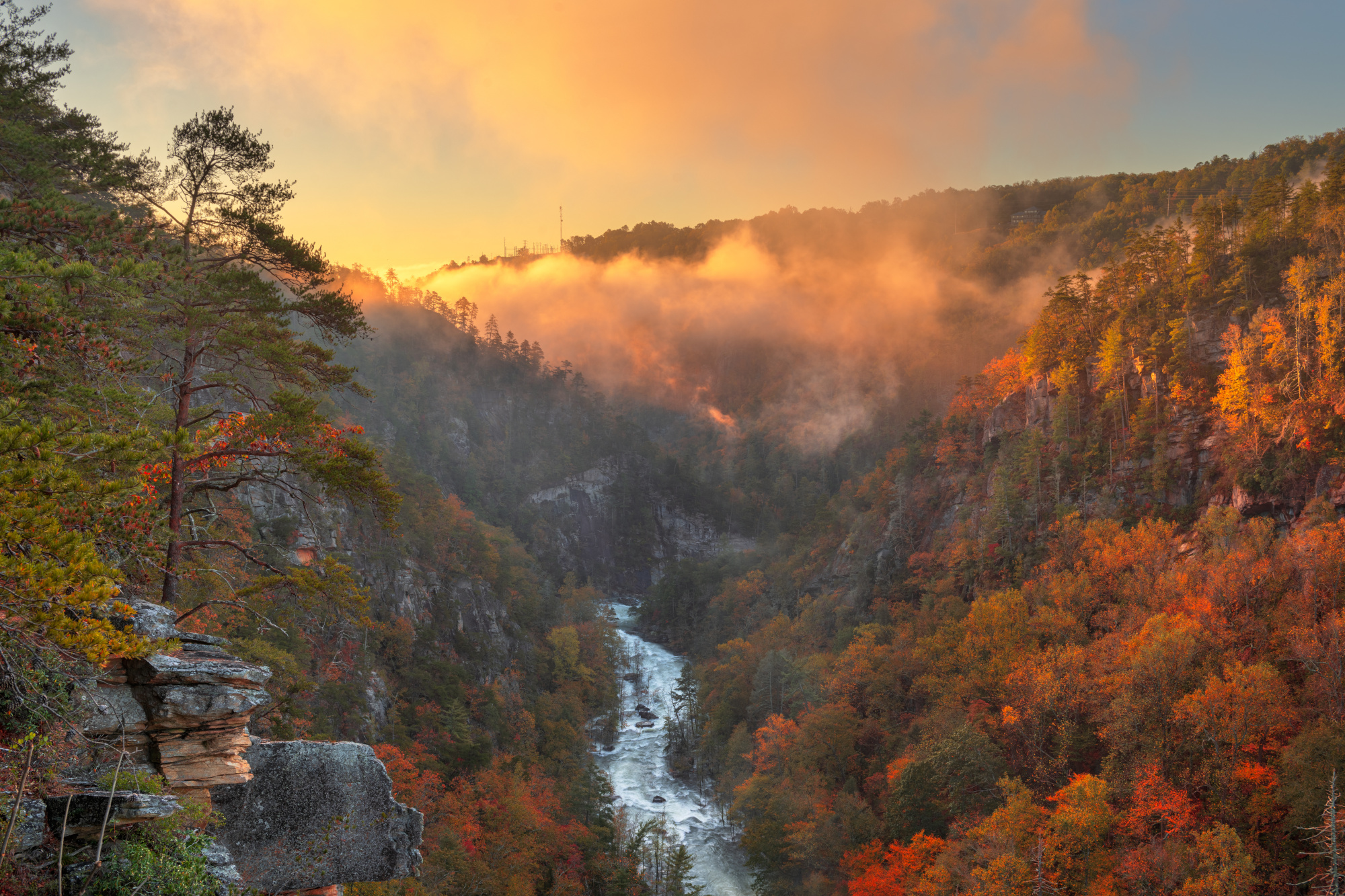
We must advocate for a Georgia that gets its priorities right. A Georgia that doesn’t bet on failing industries that harm our communities and environment. One that doesn’t line the pockets of corporate gamblers and complicit government officials.
Let’s make sure he knows how he’s failed his duties. Governor Kemp should hear loud and clear that he should have vetoed the bill. He should prioritize protecting forests and the communities that rely on them.
Call Governor Brian Kemp: (404) 656-1776
Take action: Protect Georgia’s forests and communities from wood biomass.
For over a decade, the biomass industry has sold a lie. They’ve been lying to Southern communities and decision-makers. This is especially true of the UK company Drax. They’ve violated environmental regulations over 17,000 times. These are mostly air pollution violations.
Drax has touted economic prosperity and jobs. They’ve greenwashed and spun the truth time and time again. All to make themselves seem like a good and green neighbor. You would think that the US Southeast would be having an economic boom. But the communities where biomass operates are still experiencing economic hardships. Heavy industry is causing property values to decline. And the communities are getting sicker. There are huge associated healthcare costs. If biomass stopped today, it’d still take decades of recovery.
But communities aren’t just accepting these conditions. They’re fighting back. From North Carolina to Mississippi and everywhere in-between. They’ve educated their elected officials and their communities. They’ve fought hard to stop the government handouts propping up biomass.
Communities like Gloster, MS have even had unexpected and seemingly impossible wins. Drax applied for a permit to pollute more at its Amite facility. In 2025, all members of the MS Department of Environmental Quality (MDEQ) denied that permit. Drax, of course, appealed.
Dogwood then organized a Roots & Reach conference. Community partners fighting biomass across the region were in attendance. At the conference, we:

There was also care, rest, and healing for the people fighting so hard for their lives and livelihoods.
The camaraderie built in that week suffered a big disappointment, though. MDEQ reversed course and approved Drax’s permit. Did we wallow in defeat? No! The rallying cry to support one another was the most inspiring part of the conference. There was a real show of solidarity, love, and relationship. And we need that strength and unity for the long-haul.
Dr. Krystal Martin and Kathy Egland went to Drax’s Annual General Meeting this year. And Roots & Reach attendees from across the region shared personal messages of support. We compiled a video of a some of those messages.
View this post on Instagram
A deep level of solidarity is growing. One that builds the chorus speaking truth to power against the big bad biomass company Drax.
Drax Biomass cuts down trees and sends them overseas to Asia and Europe to be burned for energy. Drax claims community safety is a priority. Yet they know they’re emitting hazardous air pollutants.
Take action today to shut down Drax and biomass in the US South!
Dogwood Alliance and New Alpha Community Development Corporation Launch Justice Conservation Fund to Protect Forests from Industrial Logging in Under-Resourced Communities Across the South
The Justice Conservation Fund helps Native American and Black communities purchase properties that will serve as community-owned hubs of forest conservation, outdoor recreation, and eco-tourism. The Fund purchased its first property on April 1 in Laurens County, South Carolina
Florence, South Carolina. Dogwood Alliance and New Alpha Community Development Corporation have launched the Justice Conservation Fund (JCF). The fund is a pioneering multi-million dollar initiative. It invests in community- and tribal-owned forests. It focuses in areas of the South lacking the resources for land protection.
The JCF provided its first funding to the Lower Eastern Cherokee Nation in Laurens County, South Carolina. The tribe purchased forested land adjacent to its cultural center. The land sits in the heart of commercial logging country. The JCF has raised over $1 million so far. The goal is to secure $5 million over the next few years. The JCF will invest in forest protection across the South. The fund focuses in communities that have borne the brunt of the negative health, economic, and climate impacts of industrial logging and wood production. Local environmental justice groups or Native American tribes will own and manage each project. They will establish community-led hubs of forest preservation, outdoor recreation, and eco-tourism.

Reverend Leo Woodberry is the Executive Director of New Alpha. He said:
“The Justice Conservation Fund is focused on protecting forests in low-income, rural communities of color like mine that have been disproportionately impacted by the commercial logging and wood pellet biomass industries. There is no justice in the environmental destruction and pollution these industries cause, but there is justice in land conservation, climate protection, and clean air. Our vision is restorative forested justice where communities build local economies that respect and allow nature to thrive for generations young and old.”
Local governments often prioritize commercial logging and wood pellet biomass industries over preserving forests. All in the name of economic growth. For a decade, under-resourced communities across the South have suffered the impacts of the rapid expansion of the biomass industry.
However, studies show that standing forests are worth 15 times more than logged forests. Outdoor recreation is a proven better economic alternative to industrial logging. Nationwide, outdoor recreation contributed $640 billion to GDP in 2023. Compare that to Forestry and Agriculture combined at $274 billion. The outdoor industry created 500,000 jobs compared to only 90,000 in the forest sector. Additionally, wetland forest ecosystem services are worth more than $500 billion. This includes water filtration, protection from extreme weather events, food, and pollination.
Danna Smith is the Executive Director of Dogwood Alliance. She said:
“Communities want to protect their forests and grow their local economies. We’re creating a new economic model in the South that’s designed to keep forests standing and rooted in community, outdoor education and recreation and climate resiliency. Currently the South is the world’s largest wood-producing region. Logging rates here are estimated to be four times higher than in the South American rainforest. The climate, health and economic impacts have been devastating for local communities. The Justice Conservation Fund is funding a new model for creating local economies that work in harmony with nature. We envision a day where our Southern forests and people thrive together.”
Commercial logging leaves communities more vulnerable to hurricanes, flooding, and extreme heat. Wood pellet biomass facilities drive the clearcutting of forests. They also emit significant levels of pollution, specifically volatile organic compounds (VOCs) and hazardous air pollutants (HAPS). These can cause cancer, brain disease, and respiratory problems.

Rev Leo Woodberry added:
“The Justice Conservation Fund will also ensure that communities can control their own destiny and grow their local economies.”
Each property purchased through the JCF will be in the hands of the communities that own them.
On April 1, the JCF provided its first grant to the Lower Eastern Cherokee Tribe in South Carolina. The tribe purchased 13.5 acres of forested land in Laurens County. The tribe already owned an adjacent 9.25 acres. With this new purchase, the tribe now owns 22.75 acres.
The tribe has named the property “Tribal Forest of the Lower Eastern Cherokee Nation of South Carolina.” They will create a 2- to 3-mile hiking trail around the perimeter. The trail will have storytelling stations about their history and culture. It will have replicas of the tribe’s traditional canoes, baskets, tools, housing materials, jewelry, and other cultural items. The land sits within the wood pellet biomass company Enviva’s sourcing radius. This project helps the tribe protect their land from industrial logging. It will also generate tourism revenue and enhance their connection to the land.
Chief Dexter Sharp of the Lower Eastern Cherokee Nation of South Carolina said:
“The opportunity to own and protect this land represents an exciting new chapter in our tribe’s history. It’s in our blood to be responsible stewards of the Earth. In the years to come, our tribal forest will not only be a popular hiking experience, but a showcase of our rich history and cultural practices. I envision generations young and old leading hikes, making food and souvenirs, and leading presentations about our way of life. It will be a bustling local economy that reflects our tribe’s values and deep respect for the land.”
Prior to purchasing the tribal forest, Dogwood Alliance and New Alpha raised over a half a million dollars. The money supported the purchase of two properties. These projects were the catalyst for the Justice Conservation Fund.
Freedom Land is a 305-acre forest along the Pee Dee River in Britton’s Neck, SC. New Alpha owns and manages this property. It will host an eco-lodge, hiking trails, and outdoor recreation activities like fishing, boating, and horseback riding. A majority of Britton’s Neck residents are descendants of people once enslaved on the property. The land will be put into a trust for those descendants.
In 2022, Dogwood and New Alpha helped the Pee Dee Indian Tribe find funding. The tribe lost all of its tribal land during colonization. They were able to purchase 77 acres of wetlands adjacent to 16 acres they already owned. The tribe is restoring the wetland. They have created an environmental education center on the property. The center focuses on Native American culture and heritage. It also educates about the importance of preserving wetlands.
“The Cherokee tribal forest is the third conservation project built on the Justice Conservation model. Economic growth by keeping our forests standing. That’s what the future of the South looks like,” said Smith.
Media Contact: Carina Daniels
[email protected]
510-847-1617
I must admit that since Super Bowl LX, I’ve had bunnies on the brain. When you think of bunnies Bad Bunny, Bugs Bunny, Thumper, Peter Rabbit, Roger Rabbit, or even the Easter Bunny might hop into your mind. But how much do you know about the actual wild rabbits you can find in your backyard?

The US South is home to four species of wild rabbits, and they play an important role in nature. Rabbits are avid grazers. These herbivores forage on flowers, grasses, herbs, shrubs, weeds, and woody vegetation. Rabbits help keep plant health in balance. They keep weeds under control and encourage biodiversity. Their waste improves soil fertility and promotes plant growth. Because it’s high in nitrogen and phosphorus, it acts as a natural fertilizer. They’re a significant part of the food web. Wild rabbits are also whimsical and a joy to observe in nature. Learn how to identify them and where you’re most likely to find them.
Eastern cottontails have reddish to grayish brown mottled fur and a white underside. They sometimes have a white spot on their forehead and a rusty patch on their rump. Their tail is short, white, and fluffy like their name implies. They also have a white or light colored ring around their eyes. They have large hind feet, long ears, and big brown eyes that help them detect predators. Adults range from 12.5 – 20 inches in length and weigh between 2 – 4 lbs.

This species is most active at dawn, dusk, and at night. They are territorial and typically stay within the same range. Their speed and agility helps them evade predators. They can run as fast as 18 mph when chased and will typically flee in a zigzag pattern. Eastern cottontails do not dig burrows. Instead they scratch out a shallow hole in grass or thick vegetation. They also seek shelter in the abandoned dens of groundhogs.
Eastern cottontails are the most abundant and expansive rabbit species in North America. Their range spans from southern Canada to northern Colombia. It includes most of the contiguous US from the East Coast to the Great Plains. Eastern cottontails prefer open meadows, grassy fields, thickets, and forest edges. They seldom roam far from the safety of cover. The IUCN Red List considers their conservation status as “least concern”. But they do face threats like disease, predation, habitat loss, and vehicle collisions.
Appalachian cottontails are distant relatives of eastern cottontails. Visually the two are quite similar, and it can be hard to tell them apart. Appalachian cottontails have golden brown mottled fur. You’ll notice they have a rusty neck patch and a white underside. They often have a black spot in between their ears and lack a white spot on their forehead. Their tails are also short, white, and fluffy. They have large hind legs, long ears, and big brown eyes. Females are typically larger than males. Adults range from 15.5 – 17 inches in length and weigh between 1.75 – 3 lbs.

This species is most active at dawn and dusk. During the day they take shelter in dense vegetation. To avoid detection, they move slowly, close to the ground with their ears back. They’re also known to remain quiet and still for up to 15 minutes. When chased, they run in a zigzag pattern to escape predators.
You can find Appalachian cottontails from Pennsylvania to South Carolina. But they’re most prominent in the Appalachians. They’re found in dense forests, brushy areas, and scrub forests. They prefer higher elevations (2,001 to 2,500 ft). Logging and development threaten Appalachian cottontail habitats. The IUCN Red List considers their conservation status as “near threatened”. Unfortunately, their populations are decreasing.
Marsh rabbits are members of the cottontail family and look similar to eastern cottontails. But their faces are slightly mousier. They have blackish brown to reddish brown mottled fur and a grayish underside. Their tails are a bluish gray earning them the name of bluetails. They have black tufts of fur on the prominent edge of their ears. Their ears are also shorter and rounder than eastern cottontails’ ears. They have short legs and often walk on all fours rather than hop. Their hind feet have noticeably long toenails. Adults range from 15.5 – 18 inches in length and weigh between 2.5 – 5 lbs.
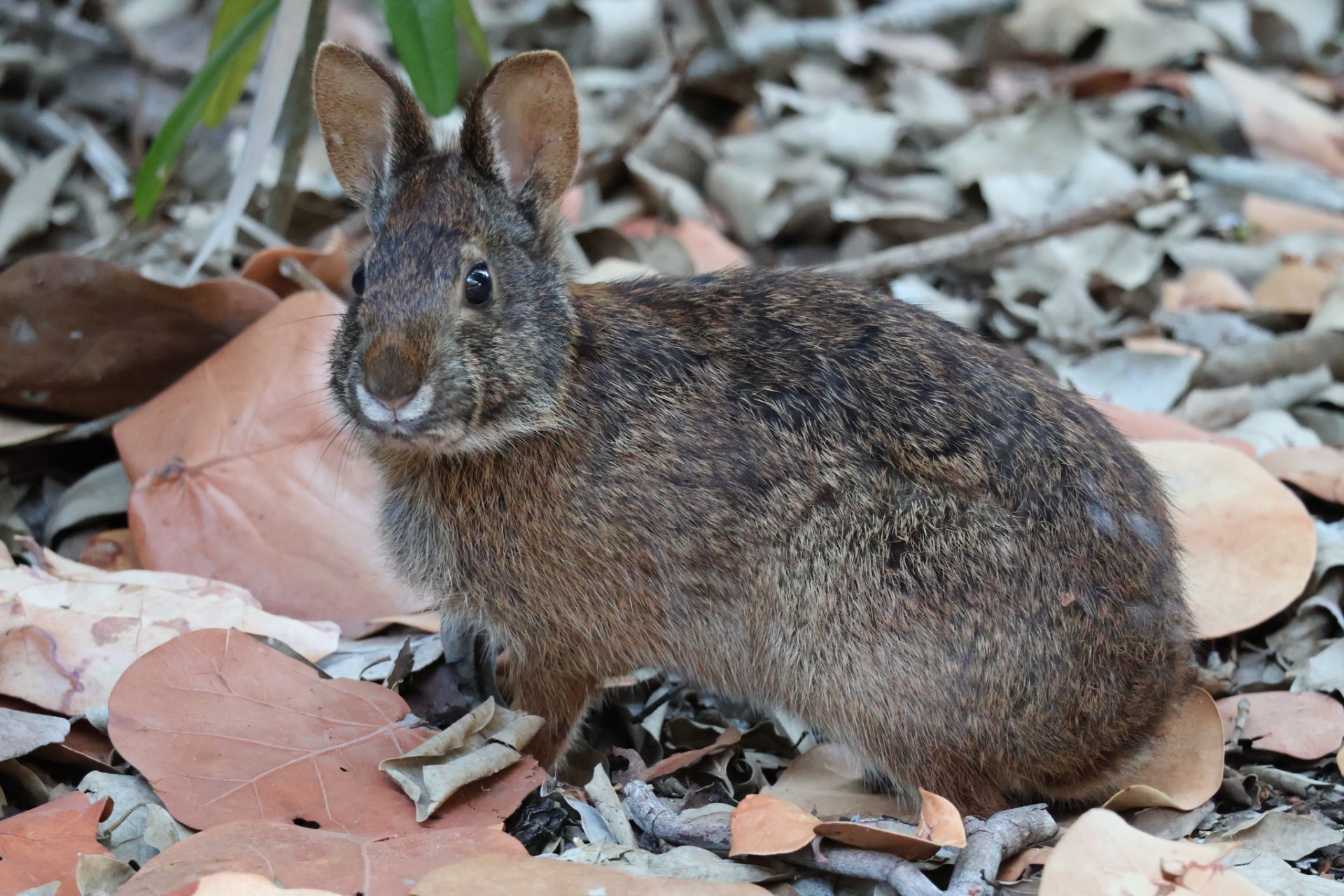
This species is most active at night. They rest during daylight hours hidden in tall grasses, dense shrubs, or hollow logs. Marsh rabbits do not dig burrows. Instead they use the abandoned dens of other animals. Or they’ll create a shallow sunken area under thick vegetation or within hollow trees. Marsh rabbits are avid swimmers and are semi-aquatic. They sometimes hide in muddy waters with only their eyes and nose exposed with their ears tucked back.
Marsh rabbits have a range that spans from coastal Virginia to the lower Florida Keys. They’re only found in wet, lowland habitats and must live near a permanent water source. They prefer marshes, swamps, coastal areas, or anywhere near lakes, rivers, and other waterways. The IUCN Red List considers their conservation status as “least concern”. But the Lower Keys marsh rabbit, a subspecies, is federally recognized as endangered. They’ve lost more than half of their habitat to sea level rise and development in the last 50 years.
Swamp rabbits are the largest in the cottontail species. They’re closely related to marsh rabbits. Their fur is light to dark rusty brown with black speckling. Their chin, throat, and underside are white. They have a cinnamon colored ring around their brown eyes. Their short tails are brown on top and white on the bottom. They have large orange hind legs and medium sized ears. Males are typically larger than females. Adults range from 17.5 – 21.5 inches in length and weigh between 3.5 – 6 lbs.

This species is most active at dawn, dusk, and at night. You’ll rarely see them during daylight hours. They’re very territorial and will leave scent marks to establish their range. Swamp rabbits rest in tall grasses or dense vegetation where they’ve made shallow dugouts for safety. They’re skilled swimmers and will dive into water to escape predators. They sometimes hide in water with only their eyes and nose exposed like marsh rabbits. On land they will flee using confusing maneuvers like zigzagging to evade capture.
Swamp rabbits are native to the south central US and the Gulf coast. They’re most abundant in Alabama, Louisiana, and Mississippi. But their range includes Georgia, Illinois, Indiana, Kansas, Missouri, Oklahoma, South Carolina, Tennessee, and Texas. They prefer wet, lowland habitats near a permanent water source. You’ll find them in cypress swamps, marshes, floodplains, or near waterways. The IUCN Red List considers their conservation status as “least concern”. Though they note that populations are decreasing overall. Data shows the species is rare or imperiled due to loss of habitat in Arkansas, Kentucky, Missouri, and South Carolina.
Most wild rabbits breed from January through September. But mating season can vary depending on elevation, climate, and other factors. Wild rabbits build their nests in dense, low vegetation. You’re most likely to discover their nests while gardening, landscaping, or mowing. If you have rabbit activity in your yard, it’s best to check your grounds for nests before mowing. Especially before your first mow of the year in spring. This could help you avoid discovering a rabbit nest too late.

Female rabbits will avoid drawing attention to their nests so the young are often left alone for long stretches of time. If you happen upon a nest of baby bunnies, it’s best to leave it as you found it. Young rabbits found outside the nest usually do not need human help. As long as they’re 4 or more inches long and are able to hop freely. If they’re smaller than 4 inches, injured, or immobile, it’s best to call a licensed wildlife rehabilitator for help. Be careful not to draw predator attention to the nest.
Wild rabbits don’t live very long. On average, their lifespan ranges from 1 year to 18 months. But there have been records of individuals living as long as 9 years in captivity. If you’re lucky enough to have wild rabbits in your backyard, know that their time with you is short. Enjoy watching them forage, lounge, and hop around. Observe them from afar and always keep your distance. Wild animals, even the cute and fuzzy ones, should always be treated with respect and caution.

Watching wild rabbits in my backyard is one of my favorite pastimes. It makes me feel happy to know they feel safe enough to make my backyard their home. I love watching them play and chase each other along the tall grass. They make me smile when they lay stretched out like they have nowhere to go and nothing to do. I also look forward to seeing baby bunnies hopping around the yard throughout the year. Observing nature always calms me and fills me with delight. They remind me to touch grass. To be wild and free.
Did you enjoy learning about wild rabbits? If so, why not show us? Share this article on social media and tag us on Bluesky, Facebook, LinkedIn, or X/Twitter! Or share your backyard bunny photos with us on social media.
Join our email list to get new Biodiversity in Your Backyard blogs sent directly to your inbox! And check out the other blogs in our Biodiversity in Your Backyard series!
You see Artificial Intelligence (AI) on the news. It’s on your social feeds. And it’s even on your phone. AI has found its way to almost every platform we use today. Companies are pushing to enhance AI to write emails, create quick consumable art, and even generate life-like viral videos. But there’s a dark side to this emerging technology.
There are ethical issues to using AI:
AI’s overuse is also creating environmental and health-related damage. The rush to add AI to products and services requires processing power and energy. And our devices can’t provide it. How are companies handling the demand? They’re building data centers with noisy and power-hungry technology. Those centers are spreading pollution into the air. They’re using almost 5 million gallons of water a day.
But it doesn’t have to be this way. We can outsmart AI. We can stop data centers from taking resources from forests and communities.

As AI data centers spread across the country, many are close to or in Black communities. These centers use more energy and water than the people in the communities they’re built in. They pollute the air with gases that cause respiratory illness. The gases also warm our climate. This makes storms like hurricanes more destructive in the South.
In Memphis, Elon Musk’s AI data center powers the Grok AI on X/Twitter. It uses over 30 methane gas-powered engines to run. These gases and other volatile organic compounds (VOCs) are getting into the air. This causes community residents to have trouble breathing. It can even trigger dangerous asthma attacks.
These centers also strain power grids and deplete water. In South Carolina, residents living near data centers have higher power bills. This creates an economic burden on Black households that struggle to make ends meet. Some energy bills are increasing by 70% or more. Data center water usage is also creating a crisis in drought-prone states like Texas.
The growing demand for data centers has been accelerating due to the use of AI services. Amazon recently bought close to 600 acres of land in Ohio to build a large data center to support its AI products. Building these data centers is already having an impact on Southern communities. Ashburn, Virginia is home to more than 250 data centers within its city limits. North Carolina has 69 data centers. Many are in or near Charlotte and Raleigh.

People living near these data centers complain of high noise levels. The machinery runs 24 hours a day. The facilities also place a burden on many communities. They’re causing a surge in the cost of electricity in their areas. Georgia Power expects power demand to triple over the next decade. This increased power demand will spike the use of fossil fuels. It may also increase the use of woody biomass. This is the burning of forests for energy. Expensive power bills and noise further will increase hardship in communities experiencing inequality.
The data centers emit toxins daily. A new report found that people living near data centers are more likely to develop lung diseases. Worse, prolonged exposure could lead to early death. Researchers estimated that a data center’s pollution affects the air of homes as far as half a mile away or more.
AI also impacts our mental health. AI chatbots can be dangerous for individuals experiencing a mental health crisis. Some people have become addicted to using ChatGPT for companionship. The deaths of two teenagers also raised concerns. Their parents discovered that ChatGPT gave them advice on how to end their lives.
AI data centers negatively affect the environment in so many ways.
These data centers are competing for space in urban areas. Some are also moving into more green spaces. Agricultural land is also under threat, making some crops harder to farm.
Biomass company Drax wants to use its wood pellet operations to support the AI boom. AI gives biomass companies an incentive to make and burn more wood pellets. More forests are clearcut to make room for these facilities and then burned to power them. The damage to the environment compounds. This accelerates pollution, while disrupting ecosystems.
These data centers use a lot of water. Google’s data centers alone used 355 million gallons of water in 2021. That amount will grow as more centers start running. This will make water scarce in regions that need it.
E-waste is any trash materials used in electronics. It’s another issue that worsens data centers’ impact on the environment. These materials erode the environment with chemicals. With the size and scale of data centers, they’re shedding e-waste at alarming rates. It’s estimated that data centers will leave over 5 million tons of e-waste in the environment by 2030.

AI may seem like it’s unavoidable, but we can make small choices that can lessen its damage.

What’s the most impactful change you can make? Reduce your use AI platforms like ChatGPT. Searches on these platforms use more energy and water to give you the same results as a normal search. Other platforms you use may have AI features. You can sometimes disable them in settings, saving power on your device.
You may have seen the “AI overview” that appears at the top of most Google searches. You can stop Google from serving the AI overview by adding “-ai” to the end of a search request. This only brings up organic search results without using data centers.
AI’s seeming ability to do everything is an illusion. Look at any AI-generated image, and you’ll see where it makes mistakes. That’s why one of the most powerful things you can do is learn skills that don’t rely on AI. You can get skills that will last a lifetime and won’t have to worry about harming the environment.
Unplug and spend time in nature. There are many health benefits to getting out in nature. It can be great exercise. It’s also a good way to spend time with friends and family. Being in nature can even improve memory and reduce anxiety.
Our lawmakers also have a role in the fight against AI data centers. Demand regulations that protect our communities and environment. Tell your lawmakers to make sure forest biomass isn’t used to power AI and/or data centers. Tell them to enact a moratorium on new and existing data centers.
Send a message to your lawmakers today!
Check out this article in Common Dreams by our Executive Director. It explains why we need more investments in forest protection, not data centers.

Biomass, or bioenergy, creates energy by burning living things like plants and trees. Many wood pellet biomass plants in the US South use trees to create wood pellets. Then they ship those wood pellets overseas. Some companies use boilers. A boiler works by burning wood pellets or wood chips. This generates heat and electricity.
Altamaha Green Energy (AGE) wants to produce 70 megawatts of energy at a woody biomass boiler in Jesup, GA. AGE plans to have a biomass (wood) boiler operating at an existing Rayonier paper mill by 2029. In November 2025, the Georgia Environmental Protection Division (EPD) issued an air permit to AGE.
But biomass facilities are not good for our forests, our economy, or our communities.
Biomass burning produces toxic air pollution. This includes:
Pollutants like these cause many health problems. The dangerous fine dust is called PM2.5. It’s especially harmful. PM2.5 can get into lungs and bloodstreams. PM2.5 can hurt lung function, worsen asthma, and cause heart attacks and premature death.
Biomass burners are as dirty and problematic as coal plants. Wood pellets are not carbon neutral. Making and burning wood pellets creates 50% more carbon dioxide than coal.
Research shows that burning biomass is not clean, green, or renewable. Burning wood is a primitive and inefficient energy. Biomass costs more than other proven renewable energy. Bioenergy has been an expensive failure in other cities. In Gainesville and Austin, biomass operations were money pits.
The Jesup biomass project will cost ratepayers more than 3x the economic value. An independent evaluator said the contract is not in the best financial interest of billpayers and:
“…it would be beneficial to GPC ratepayers if the developer chose to terminate the [agreement].”
Previous use of biomass in Georgia hasn’t been efficient or a good value for ratepayers. In a blackout during December of 2022, only 63 of 330 MW’s of biomass-produced energy was available. This is a 19% efficiency. Based upon the 20% efficiency rate, only 13.3 MW of the planned 70 MW from Altamaha will be available. The majority of the energy will be released as steam which will be sold commercially.
The proposed biomass-burning plant in Jesup will harm communities. They will pay with their health and income. Take action now to say NO to dirty biomass in Georgia.
The biomass industry has a history of violations. Every wood pellet plant in Georgia has been in violation of their air permit. The Beasley Group is the owner of FRAM Renewable Energy. They’re also the owner of Altamaha Green Energy. The Beasley Group has violated their air permits at all five of their locations across our state.
Woody biomass companies cut trees to burn for energy. High demand for biomass opens up more forests to logging. Logging for wood pellet biomass has clearcut more than 900,000 acres in the US South in the last decade. Southern forests provide many important benefits to humans. They provide us with oxygen to breathe, clean water, and homes for animals. Forests also give us food, medicine, and materials for clothing and shelter. They also protect us from flooding and extreme storms. Forests are a vital part of our planet and are necessary for our survival.
The state of Georgia is in an energy crisis. Georgia Power wants taxpayers to subsidize them. Then they can line their pockets while ratepayers pay more for dirty energy. Domestic biomass burning is being touted as a new alternative. All at the cost of:
AGE’s plan to install a 70 MW biomass plant in Jesup, Georgia is not good for us now or in the future.
Biomass boilers are expensive, inefficient, and create pollution. The costs of this project will be passed on to ratepayers. It’s unlikely AGE will be able to produce 70 megawatts of energy. Local residents will face increased pollution that is harmful to human health. Say “NO” to this biomass boiler scheme.
The pollution can be harmful for people’s lungs and heart. It can even cause cancer.
We need Georgians to raise their voices. The state of Georgia must stop handing out taxpayer funding. They must stop greenlighting permits for the dirty biomass industry. Take action now!
This year’s Conference of the Parties (COP30) is in Belem, Brazil this November. Brazil holds the presidency at this year’s COP. The bioeconomy will be center stage. The bioeconomy aims to unite the preservation of nature with economic growth. This position is central for the Brazilian government.
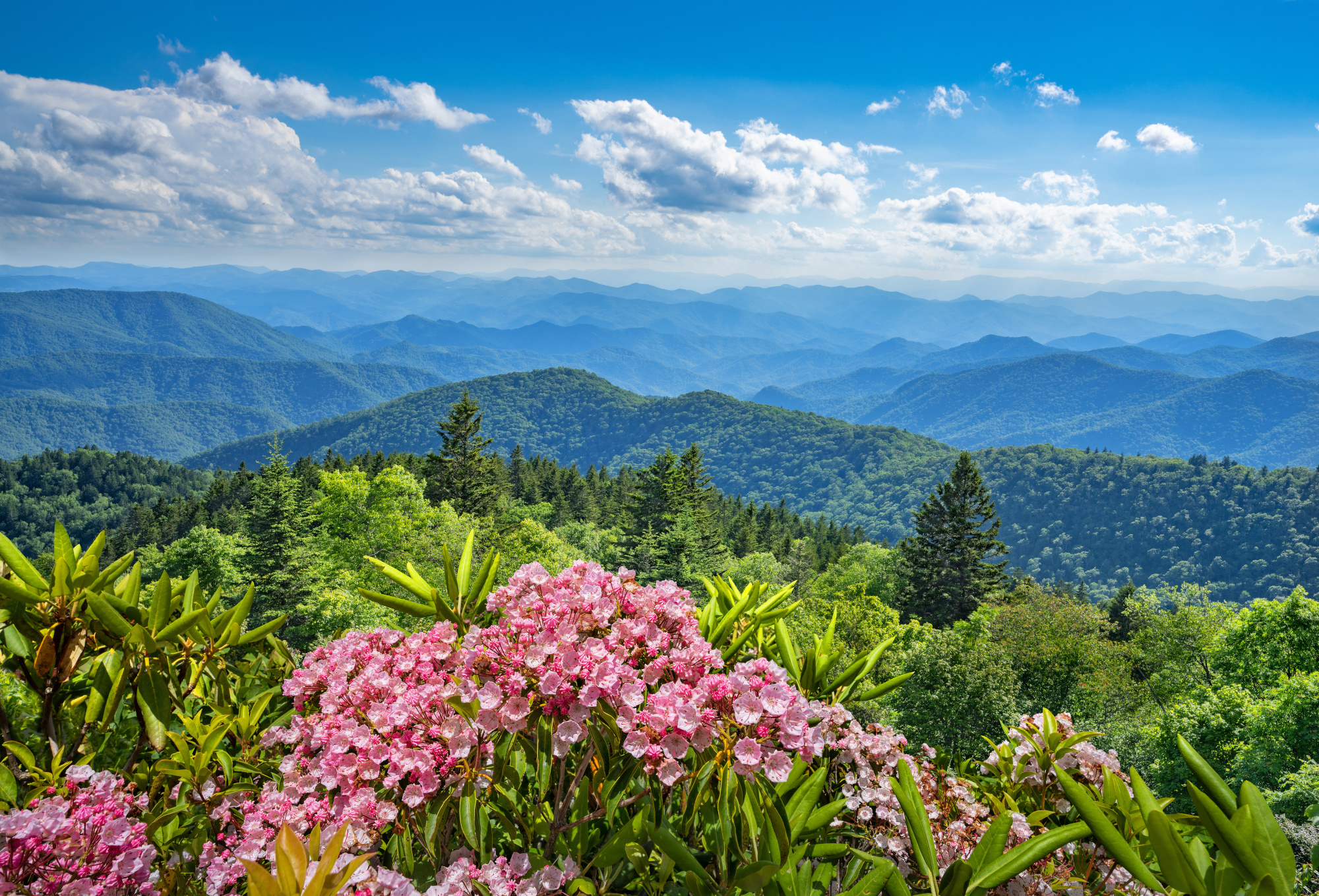
The bioeconomy ideally uses nature-based resources that are renewable. Those resources are then turned into food, products, and energy. This sounds good in theory. But it will likely minimize ecological preservation. Instead, all the focus will be on advancing economic growth. Forest biomass is a guaranteed part of Brazil’s proposed bioeconomy. Biomass companies chop down trees, chip them up, and pelletize them. Then they ship these pellets around the world where they’re burned for electricity. This bioeconomy proposal could usher in a new era of greenwashing at a massive scale. It could destroy any hopes of protecting forests globally.
The latest news from Brazil confirms this worry. The country’s finance minister is proposing a coalition for carbon markets. Carbon markets are a system to earn or buy credits for carbon emissions. Companies, governments, etc. can earn credits for reducing their emissions. Then others can buy those credits to offset their own emissions. This is a shell game. It allows big polluters to keep polluting without consequence. Delegates to COP30 must raise concerns about this scheme.
Forests are an integral part of life. They affirm our human relationship within nature. Standing forests are also critical in the fight against climate change. This is a different perspective from forests as a consumable resource. The biomass industry puts profit over the intrinsic value of forests. These companies claim they’re sustainable. But burning trees for energy and heat is not carbon neutral. In fact, it’s one of the worst carbon accounting errors ever. European and Southeast Asian governments fear the phaseout of coal. They’ve chosen to sacrifice our forests as their transition out.
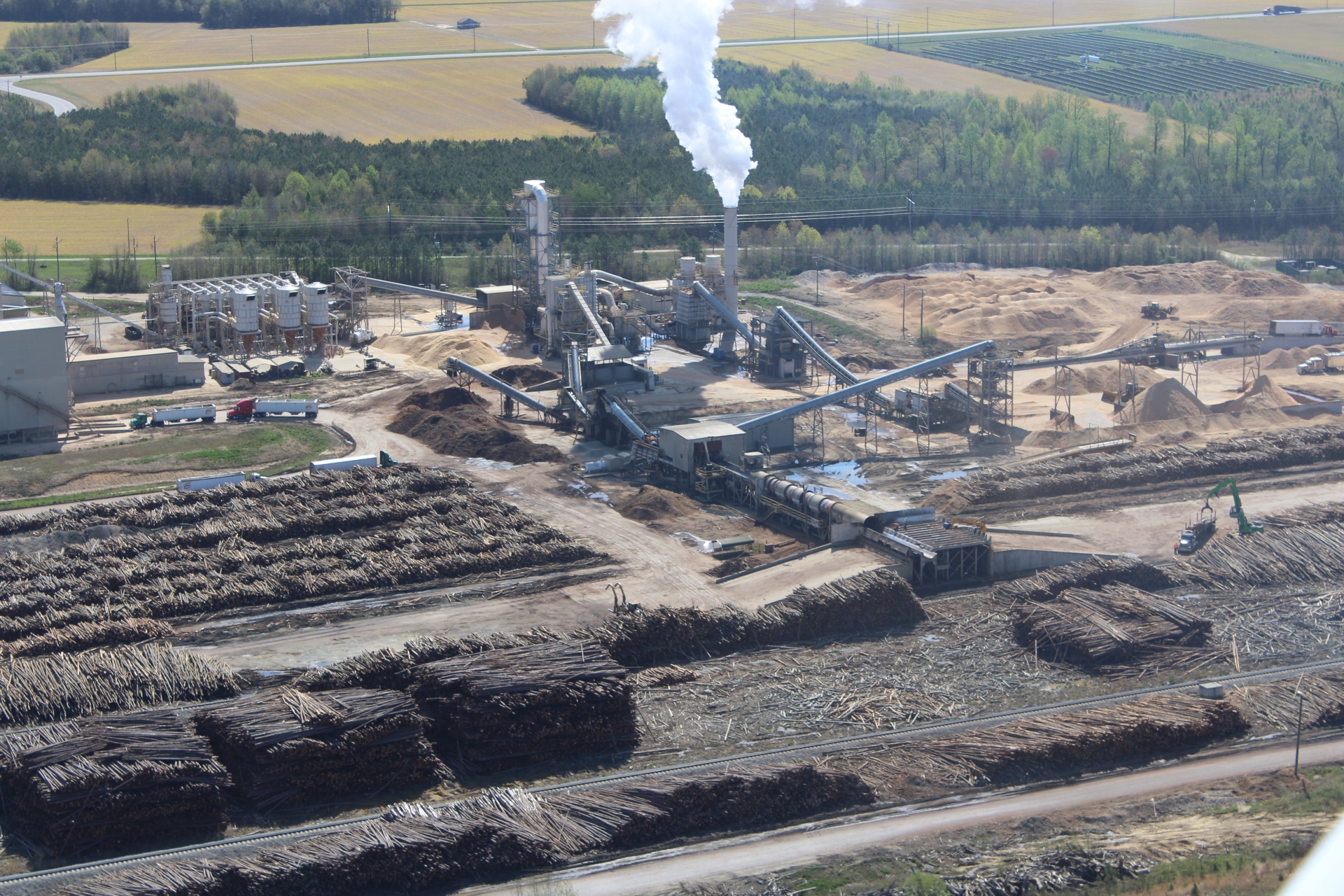
We’re now in the same place with Brazil’s new proposed bioeconomy. If we approve a transitional proposal, it will be a boondoggle that won’t go away. Just like the biomass industry. In fact, some governments are still locked into subsidizing biomass companies for years. Some even go beyond the 2030 coal phaseout timeline. The long-term outcomes of this proposed bioeconomy will be just as disastrous. Both economically and ecologically. How can we let this industry operate with the global challenge of climate change? It’s not only dangerous, it’s a death sentence. In the US South, this has meant increased pollution. Health conditions like cancer and pulmonary diseases have increased. And for the forests we hope to protect? It’s led to the clearcutting of vital forests. Can we negate industry’s attempts to burn our forests for cash? There’s no evidence of the size, scale, and scope of forest protections that would be necessary. We need policy protections at the international level. Without them, the Brazil’s bioeconomy proposal propels us into murky waters. We’ve witnessed biomass corporations co-opting the well-intentioned idea of a managed energy transition. Now how will this industry capitalize on Brazil’s proposed economic growth?
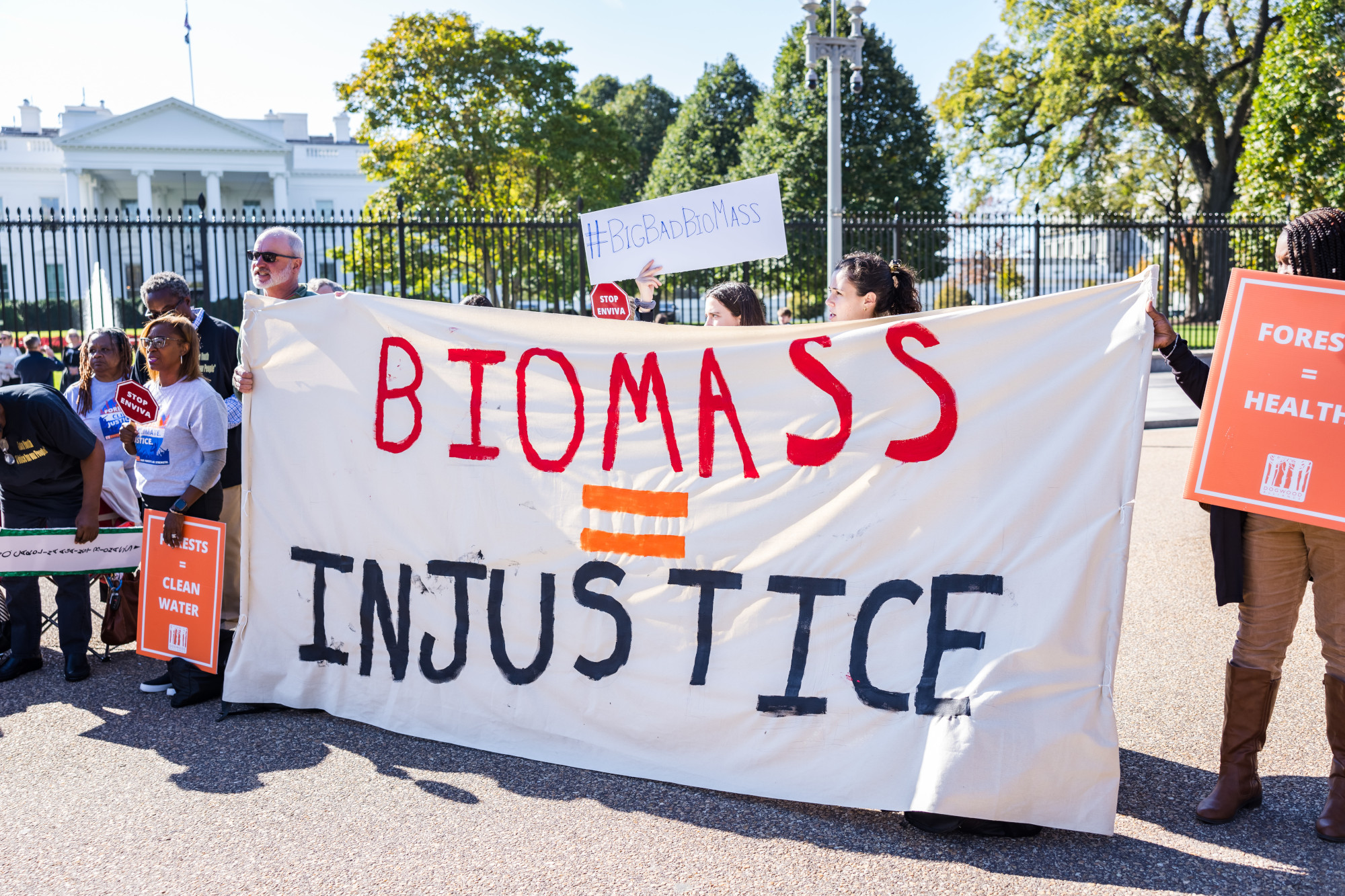
At COP30, delegates could easily accept this proposal without considering the fallout. Or they could follow our recommendations. In short, we can:
You can make a difference. Join Dogwood Alliance’s email. We’ll keep you up-to-date on actions, opportunities, and events.


 Donate
  April 5, 2026