How many species of plants and animals live in your backyard? In your town, city, or state? There are thousands just waiting to be discovered!


How many species of animals do you think live in your backyard? What about in your town, city, or state? There are hundreds and even thousands of species of plants and animals right in your backyard. These species biodiversity examples are just waiting to be discovered!
Lucky for you, we love the plants and animals that call the US South their home. We’re so excited to share these resources on backyard biodiversity. You can learn all about the native trees and animals of this region.
Frequently Asked Questions About Biodiversity
Explore Biodiversity in the US South
Having a wide variety of native species (“richness”) in our local ecosystem can do things like:
In scientific terms, biodiversity is known as a “supporting” ecosystem service, because having great biodiversity improves everything else around us. The number of native plants and animals that we have around us improves the food we eat, the air we breathe, and the water we drink. It even improves global species diversity!
We’ve identified more than 200,000 native species in the United States, but there are also many introduced and invasive species in our country as well. A native species is a plant or animal that evolved here. An introduced species is any species that was brought here from a different continent but doesn’t cause any ecological problems. Finally, an invasive species is a plant or animal that was introduced and now causes ecological problems like habitat loss or other species’ declines. Invasive species are a huge problem in this country and across the world.
The top four states with exceptional biodiversity are California, Hawaii, Texas, and Alabama, so half of those biodiversity-rich states are in the South. However, the US South is so full of biodiversity that it’s been identified as a priority by several scientists from various universities, including Florida International University, NCSU, Duke University, and Michigan State University.
So many different plants and animals contribute to biodiversity in the US South. These species collectively create habitats, host plants, and provide food sources for many other living organisms in the South.
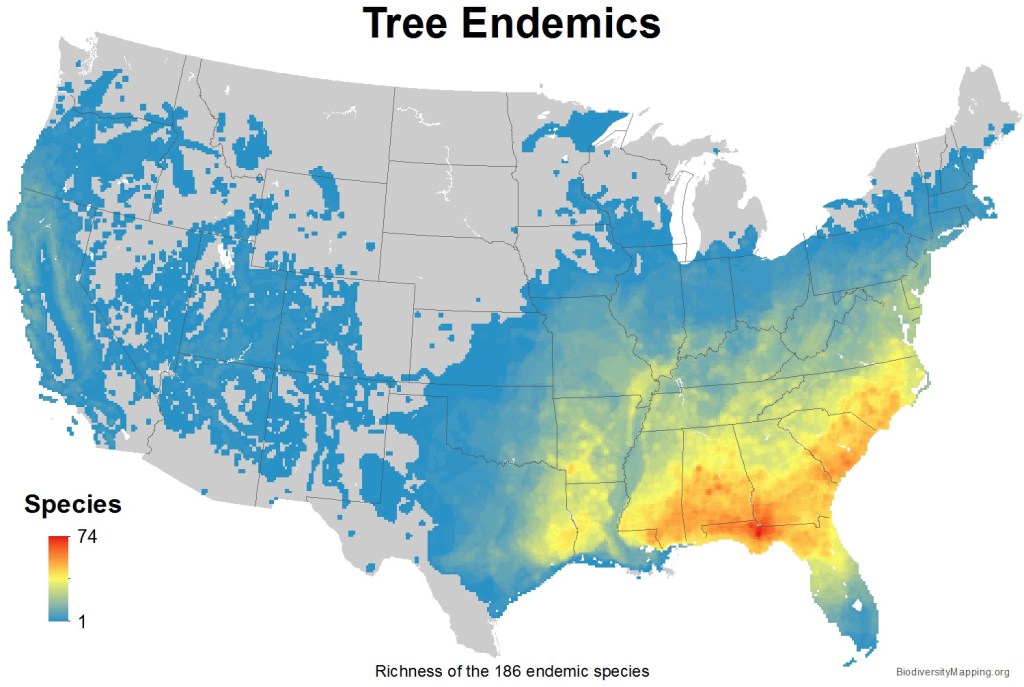
Native plants are critical to supporting different species in our forests, fields, and farms across the US South. Native plants can even help us avoid the application of chemical fertilizers and chemical pesticides on the food that we eat or the plants and trees that we grow. There are a surprising number of native trees in the US – 186 species with up to 74 occurring in and around the panhandle of Florida.
If you’re curious about trees, shrubs, plants, and fungi, we’ve got some great resources for you:
If you’re curious about mammals, creepy crawlies, and everything in between: this is the place for you. There’s a huge diversity of insects and butterflies in ecosystems across the United States. We need bees and butterflies to serve as pollinators for our food and flower crops. They become food for the birds, reptiles, and amphibians that live in habitats across the US, too!
From predators to prey, from frogs to foxes, we’ve got some great resources for you:
As the year progresses, you can find different species in your area. Even with climate change and habitat loss, there’s a wide variety of wild species that you can find right in your garden or backyard. Learn about the plants and animals that are most popular in autumn, around Halloween, in the early spring, and more!
With increasing pressures on US forests, nature is at risk. Threatened species, dead trees, declines in fish species, and more all indicate that our wildlife is at risk. Biodiversity doesn’t exist in a vacuum, and this wildlife needs us to play critical roles in their preservation.
From fresh water to forests, we hope that you’ll join us as we explore the gardens, backyards, and other habitats that make up homes for wildlife across the US and the world.
Join us as we explore! We’ll learn about the wildlife, plants, trees, and even mushrooms. All right outside our doors. When you sign up, we’ll deliver more Biodiversity in Your Backyard tips directly to your inbox!


 Donate
  April 5, 2026